
Silly Jokes: Funny, Goofy & Clean Jokes for Quick Laughs

Silly jokes are simple, goofy bits of humor built for a quick laugh, and they work especially well when the punchline is unexpected. From funny questions and animal humor to playful puns and absurd situations, these jokes are easy to remember, easy to tell, and perfect for family friendly fun.
I’ve always found that the best silly jokes don’t need a complicated setup. A familiar subject, clean humor, clever wordplay, and a ridiculous ending can turn an ordinary moment into a giggle. Whether you’re entertaining friends, brightening family time, or looking for a quick joke to share, these playful laughs keep things light.
These examples follow the strongest recurring patterns in the competing pages: familiar objects, food, animals, school, puns, simple questions, and short punchlines. Those subjects are repeatedly used because readers can understand the setup immediately without needing background knowledge.
Easy silly jokes for ages 4-6
For younger children, silly jokes work best when the setup is short, the vocabulary is familiar, and the punchline arrives quickly. Simple animals, food, toys, colors, family situations, and everyday objects make excellent joke material because young listeners can picture them immediately.
The goal isn’t complicated comedy; it is participation. A child who can remember a joke after hearing it once has something they can proudly tell a parent, sibling, teacher, or friend. That little moment of confidence can make an ordinary afternoon much more playful.
Cleverer silly jokes for ages 10-12

Older children can handle more layered wordplay, playful misdirection, and punchlines that require a second to click. That doesn’t mean the humor needs to become complicated. A familiar situation with a surprising interpretation is often enough to create the satisfying “Oh, I get it!” reaction.
For tweens, try jokes involving technology, school, science, sports, language, or everyday observations. These topics give the punchline something recognizable to twist, while still keeping the humor clean enough for family conversations and school friendly settings.
Short Funny One Liner Jokes
Short one-liners are ideal when the reader wants a laugh without a long setup. They can work in texts, captions, group chats, lunchbox notes, casual conversations, or simply as quick entertainment while scrolling. The strongest ones usually depend on one clear idea and a punchline that lands immediately.
Silly humor fits the format naturally because it doesn’t need elaborate storytelling. A tiny observation can be enough: a confused object, an exaggerated situation, or a familiar phrase taken in a ridiculous direction. The trick is knowing when to stop; explaining the joke usually steals its best moment.
Fresh one-liners:
- My alarm clock and I have a complicated relationship. It keeps waking me up.
- I told my backpack to relax. It said it had too much baggage.
- My socks are very independent. They always disappear in pairs.
- I opened a bakery for lazy people. We specialize in loafing.
- My pencil is very confident. It always makes a point.
- I wanted to tell a joke about paper, but it was tearable.
- My chair is excellent at supporting my decisions.
- I named my dog “Six Miles.” Now I can say I walk Six Miles every day.
- My phone went to school because it needed better connections.
- I tried to organize my thoughts. They refused to line up.
The competitor structure explicitly separates quick one-liners and very short jokes, confirming that brevity is a major use case within the broader funny-joke intent.
Joke of the Day Picks
A joke of the day format gives readers a simple reason to return instead of consuming an enormous collection in one sitting. One funny line at breakfast, in a group chat, during family time, or before school can become a tiny daily ritual.
For variety, rotate the subject rather than repeating the same style. Try animals one day, food the next, then school, everyday objects, riddles, or wordplay. This keeps the humor fresh while giving different readers a chance to find a favorite.
The daily pick concept is directly represented in the competitor structure, where readers are encouraged to choose one joke rather than consuming every joke at once.
How to Tell a Joke and Get a Big Laugh
Good delivery can make an ordinary joke noticeably better. Keep the setup clear, pause briefly before the punchline, and avoid rushing the final words. A relaxed voice and a little expression can help, especially when children are learning how to tell jokes themselves.
Audience matters too. A joke that works with a sibling might not work in a classroom or at a family gathering. Clean humor, familiar subjects, and short setups are usually safer choices when several age groups are listening. Most importantly, have fun instead of worrying about getting a perfect reaction.
A simple delivery formula:
Setup → short pause → punchline → let the reaction happen.
Competitor guidance also emphasizes simplicity, timing, expression, audience awareness, and avoiding unnecessary explanations after the punchline.
What Makes a Joke Funny for Kids?
Kids’ humor often works because the subject is familiar but the ending changes expectations. Animals, food, school, family life, silly situations, and wordplay give children an easy starting point. Then the punchline creates a small surprise that transforms something ordinary into something funny.
A memorable joke also needs to be easy to repeat. If a child hears it once and immediately wants to tell someone else, the joke has done its job. That’s why simple language and recognizable situations often outperform complicated setups when the audience is young.
Why Do Kids Love Funny Jokes?
Funny jokes give children an easy way to play with language, surprise friends, participate in conversations, and share something they discovered. The experience isn’t only about the punchline; telling the joke can become a small performance that encourages confidence and social interaction.
That explains why a joke that seems extremely simple to an adult can become a child’s favorite for an entire week. Repetition is part of the fun. A familiar setup creates anticipation, while the punchline gives everyone a reason to laugh together.
How to Use These Jokes at Home, School, and Parties
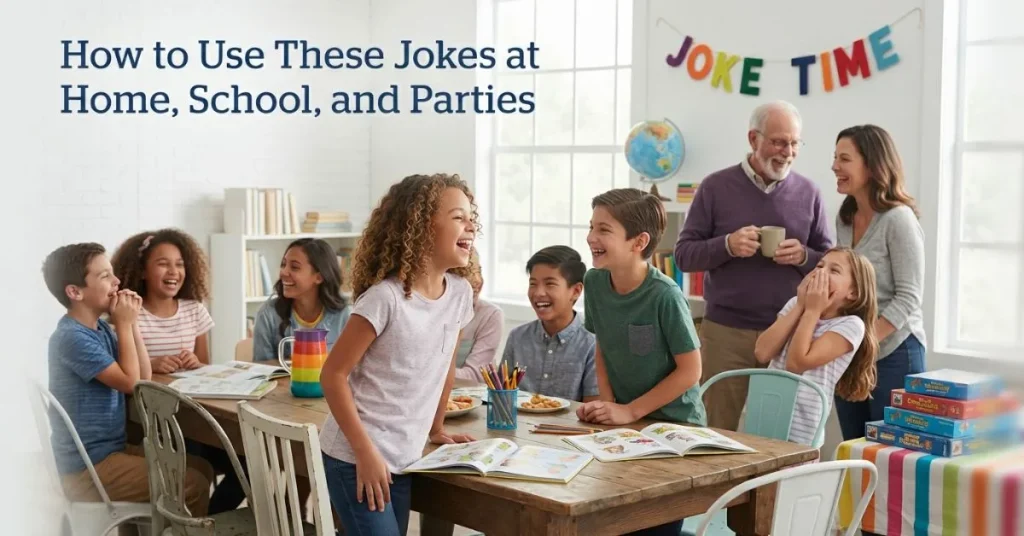
Silly jokes are flexible because they require almost nothing except a willing audience. At home, they can brighten dinner. At school, age appropriate jokes can make an approved activity more enjoyable. At parties, short jokes can act as icebreakers, while road trips and family gatherings give everyone time to take turns.
For social sharing, choose the shortest punchlines. For younger children, favor animals, food, toys, and familiar situations. For older kids and adults, cleverer wordplay can add variety. The key is matching the humor to the setting and audience instead of forcing one style everywhere.
FAQ: Silly Jokes
What are some silly phrases?
Silly phrases are short, playful expressions that sound funny because they are unexpected, exaggerated, or simply nonsensical. Examples include “My socks are having a meeting” or “The banana forgot its homework.”
What’s the most funny joke in the world?
There is no single funniest joke for everyone. Humor depends on age, personality, and situation, but short jokes with clever wordplay and surprising endings are often easy crowd pleasers.
What’s a good one line joke?
A good one line joke is quick and easy to understand, such as: “I told my pencil a joke, but it had no point.”
What’s a funny kid joke?
A funny kid joke is simple, harmless, and easy for children to understand. For example: “Why did the student eat his homework? Because the teacher said it was a piece of cake!”