
Racist Hispanic Jokes: Where Humor Crosses the Line
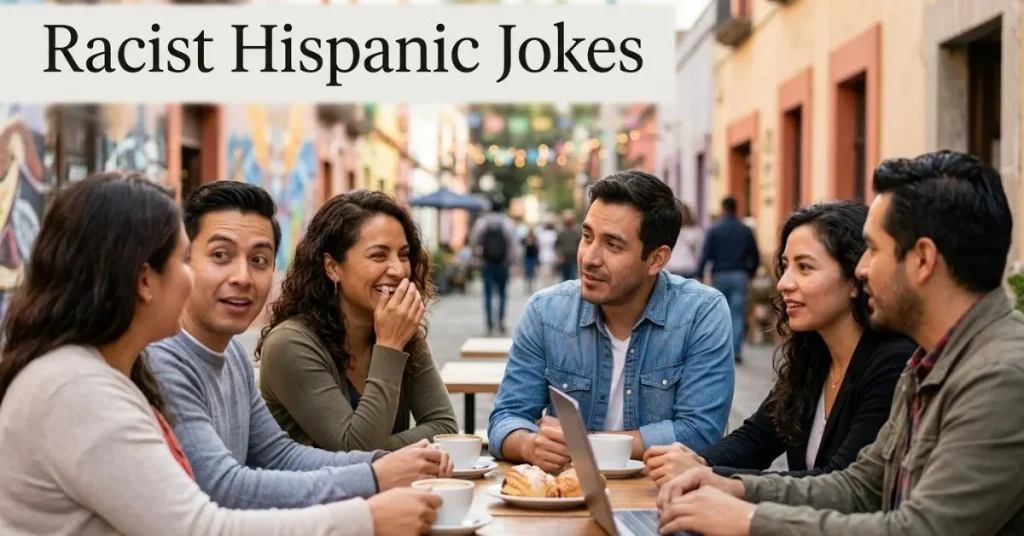
Racist Hispanic jokes are jokes that use Hispanic identity, ethnicity, nationality, language, or cultural stereotypes as a target. Understanding the difference between playful cultural humor, satire, and genuinely demeaning racial humor requires context, intent, audience, and the stereotype behind the punchline.
When people search for racist Hispanic jokes, they may actually be looking for examples, explanations, or help deciding whether something they heard was offensive. That distinction matters. Hispanic and Latino communities are culturally diverse, and research shows that racially insensitive jokes can occur both within Hispanic communities and between different groups.
Funniest Hispanic Short Jokes
Short Hispanic jokes often depend on wordplay, Spanish English language differences, names, food references, or familiar cultural situations. That kind of humor does not automatically become racist simply because Hispanic identity is mentioned. The important question is whether the joke depends on degrading people because of ethnicity.
A harmless cultural pun can invite people into the joke, while a stereotype based joke can make an entire community the punchline. When discussing racist Hispanic jokes, it is useful to examine the target, wording, context, and underlying assumption rather than judging every ethnic joke by its subject alone.
Hispanic One Liners
One liners are especially dependent on context because a single sentence may leave little room to explain intent. Hispanic humor can involve bilingual wordplay, Spanish expressions, family experiences, food, music, names, or everyday misunderstandings without attacking anyone’s identity.
The problem begins when the humor depends on portraying Hispanic people as inferior, dishonest, unintelligent, criminal, uneducated, or otherwise defined by a negative ethnic stereotype. A joke can be brief and clever without making someone’s heritage the reason they deserve ridicule.
Hispanic People Jokes
The phrase “Hispanic people jokes” covers a very broad category. Hispanic Americans are not one uniform cultural group: Mexican Americans, Puerto Ricans, Cuban Americans, Salvadoran Americans, Dominican Americans, and many other communities have different histories and traditions.
That distinction matters when evaluating racist Hispanic jokes. Treating every Spanish speaking or Latino person as interchangeable can itself create a stereotype. Research from Pew has also documented that Hispanic adults report hearing racially insensitive jokes about both other Hispanics and non Hispanics from friends or relatives.
Hispanic Latino Jokes
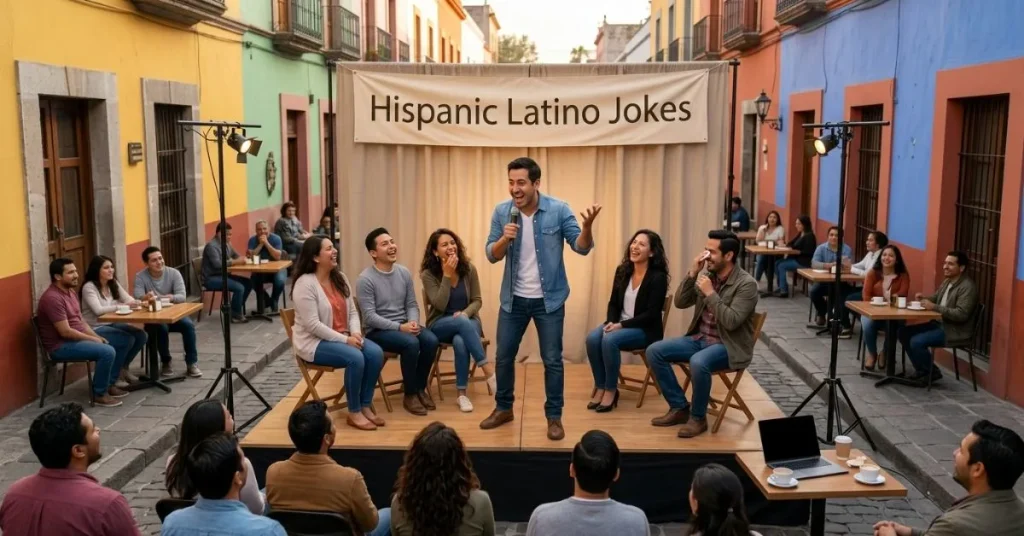
Hispanic and Latino are related but not identical terms, and the communities described by these labels contain substantial cultural diversity. Humor about Hispanic or Latino life can be affectionate when it draws on shared experiences rather than assigning negative characteristics to everyone.
Good cultural comedy often has a recognizable human experience at its center: family misunderstandings, bilingual situations, generational differences, celebrations, or everyday life. The distinction is important because humor about a culture is not automatically the same thing as humor that attacks people because they belong to that culture.
Great Hispanic Jokes to Share, Laugh and Enjoy with Friends
The safest way to share culturally themed humor is to consider the audience and the setting before posting or telling it. A joke that depends on an insulting stereotype can land very differently in a classroom, workplace, family gathering, public social-media post, or private conversation.
A useful test is to ask what the audience is supposed to laugh at. If the humor comes from an ordinary situation or clever wordplay, the ethnic identity may simply provide context. If the punchline requires the audience to believe Hispanic people are inherently inferior or dangerous, the joke is relying on a harmful stereotype instead.
Stereotypes and Comedy: Finding Where The Line Is
Comedy has a long history of using stereotypes, exaggeration, caricature, and social observation. The difficult part is identifying whether a joke is challenging a stereotype or simply repeating it. Comedy criticism has repeatedly examined how audience expectations and cultural context affect reactions to racial humor.
A useful distinction is whether the joke gives the audience something else to examine. Satire can expose prejudice by making the prejudice itself look ridiculous. A stereotype presented without criticism can instead reinforce the same assumption it appears to be joking about. Context, performer perspective, audience, and target all influence interpretation.
Hispanics often hear other Hispanics make racially insensitive comments and jokes about Hispanics and non Hispanics alike
Pew Research Center found that 48% of Hispanic adults surveyed said they had often or sometimes heard a Hispanic friend or family member make comments or jokes that might be racist or racially insensitive about other Hispanics. Forty five percent reported hearing similar comments or jokes about people who were not Hispanic.
Those findings illustrate why “it’s only a joke” does not completely settle the question. People can interpret the same joke differently depending on personal experience, relationships, setting, and cultural background. The research also shows that racial humor is not simply a matter of one group making jokes about another; it can appear within communities as well.
Understanding intent versus impact
Intent explains what the speaker meant to accomplish, but impact describes how the words are received. Someone may intend a joke as playful while another person experiences the same comment as an ethnic insult.
That does not mean every uncomfortable joke should automatically be labeled racist. It means context deserves attention. Looking at the stereotype, target, setting, relationship, and reaction creates a more useful discussion than relying only on whether the speaker claims they were joking.
Why context changes the meaning
The same words can function differently in a close friendship, a comedy performance, a workplace, or a public social media post. A familiar group may share humor based on experiences outsiders would not understand, while the identical wording from a stranger can communicate something very different.
That is why responsible discussion of racist Hispanic jokes should examine the surrounding situation. Who is speaking? Who is being targeted? What stereotype is being invoked? Is the joke challenging that stereotype or presenting it as true?
A better approach to Hispanic themed humor
Cultural humor does not have to disappear simply because stereotypes can be harmful. Writers and comedians can focus on universal experiences, clever language, family dynamics, cultural misunderstandings, generational differences, and everyday situations instead.
That approach keeps the cultural flavor while moving the punchline away from someone’s ethnicity being inherently funny. It also gives audiences more room to laugh at a situation rather than laughing at a group of people.
FAQ
What are Hispanic Latino jokes?
They are jokes involving Hispanic or Latino culture, language, traditions, or everyday experiences.
Can Hispanic jokes be offensive?
Yes. Jokes can become offensive when they rely on stereotypes or demean people.
What makes a Hispanic joke respectful?
It focuses on relatable experiences without insulting a group or promoting stereotypes.
Can Hispanics joke about Hispanic culture?
Yes, but humor can still be sensitive, especially when it targets individuals or groups.